





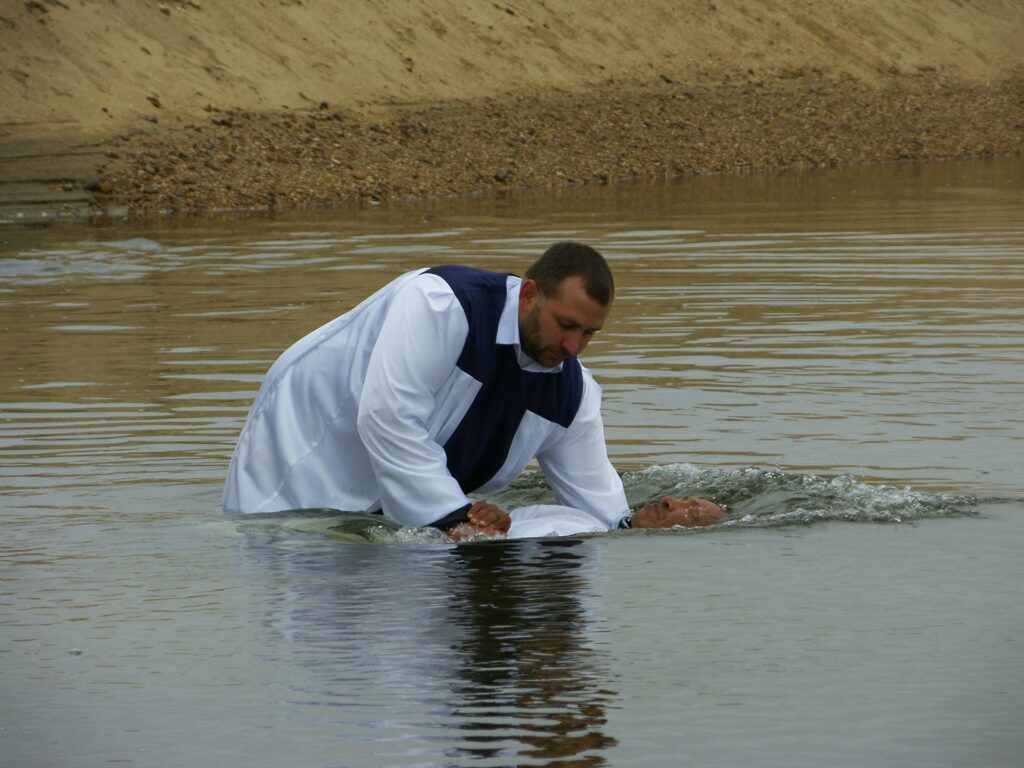
Buried with Him (Romans 6:1-4)
While I was preaching in Virginia, a young woman asked me to baptize her. She had been raised in the church, and her grandfather had served as a preacher and an elder. She, therefore, knew what she needed to do. But, as a drug addict, she struggled, and she wished to put that life behind her and to live in Christ.
I baptized her, and this young woman began to grow spiritually. But it wasn’t long until that growth slowed and then stopped altogether. And it wasn’t long until this young woman began abusing drugs again. Tammy and I both made overtures to help, but she rejected them all.
A few months after this girl began to backslide, I got a phone call—this young woman had been under the influence of drugs and alcohol while she was driving. And she was involved in a very serious accident. And, today, 12 years later, this lady remains in a vegetative state. All because baptism never changed her life.
You’ve seen people before and after baptism. Some of those folks made big changes in their lives—they repented of their sins and were raised from baptism to a new life. Others never made a change—perhaps they were baptized to placate a loved one or because their friends were being baptized or maybe they wanted to change but never did.
Regardless of what sins may or may not be in a person’s life when he comes to Jesus, baptism signals a change of life. That’s the truth Paul proclaimed throughout Romans 6. In this morning’s text, Paul said, “Your baptism was a death, and your baptism was a resurrection.”
Scripture (Romans 6:1-4)
verse 1-2:
Paul has just concluded a discussion on grace: “Where sin increased, grace abounded all the more” (Rom 5:20). Paul then pictured someone’s saying, “Because God loves to forgive sin, I’m going to commit every sin possible so God can forgive and forgive and forgive.”
Paul answered that imaginary person by saying that a Christian cannot live in sin, for he has died to sin.
verse 3:
“Do you not know?” The implication is unmistakable—the Romans should have known.
“All of us who have been baptized into Christ Jesus.” Being baptized into Christ means to be united with him.
“Were baptized into his death.” As being baptized into Christ is being united with him, being baptized into his death is being united with his death.
verse 4:
“We were buried with him by baptism into death.” Being buried—immersed—with Jesus into baptism placed us into his death.
“Just as Christ was raised from the dead by the glory of the Father, we too might walk in newness of life.” The Jews of Paul’s day knew baptism. When a Gentile converted to Judaism, he was immersed in water. And, in so doing, he turned his back on his pagan life, and Jews considered him a new person. Likewise, when one submits to Christian baptism, he surrenders his old life and is given a new identity in Christ.
Application
“Your baptism was a death, and your baptism was a resurrection.” Jesus died and was raised. When you were baptized, you died and were raised—you died to sin and you were raised to new life.
Because “Your baptism was a death, and your baptism was a resurrection,” understand two truths.
One: You have Died.
When you submitted to baptism, you Died to sin. “We know that our old self was crucified with him in order that the body of sin might be brought to nothing, so that we would no longer be enslaved to sin” (Rom 6:6). “You also must consider yourselves dead to sin and alive to God in Christ Jesus” (Rom 6:11).
Death separates. This morning, your loved ones who have died are separated from you. James said, “The body apart from the spirit is dead, so also faith apart from works is dead” (Js 2:26)—Someone is physically dead when his body is apart from his spirit; someone’s faith is dead when his faith is apart from his works.
When you died at baptism, you separated yourself from your sin. When Jesus forgave a woman caught in adultery, he expected her to separate herself from sin: “Go, and from now on sin no more” (Jn 8:11). Zacchaeus, a tax collector, separated himself from his sin: “Behold, Lord, the half of my goods I give to the poor. And if I have defrauded anyone of anything, I restore it fourfold” (Lk 19:8). The Corinthians separated themselves from their sin; Paul listed a host of sins—e.g., idolatry, homosexuality, drunkenness, and swindling—and then he said, “And such were some of you” (1 Cor 6:11).
Have you separated yourself from your sin? How does the life you lived before you became a Christian correspond to the life you live today? How different is your life? What is different about your life? Have you Died?
Two: You have been Raised.
When you submitted to baptism, you were Raised to a new life. “You also must consider yourselves dead to sin and alive to God in Christ Jesus” (Rom 6:11). “Having been set free from sin, [you] have become slaves of righteousness” (Rom 6:18).
Our faith is not simply a host of sins to be avoided; our faith is good to be performed. Following Jesus means actively doing good. You should “walk in a manner worthy of the Lord, fully pleasing to him: bearing fruit in every good work and increasing in the knowledge of God” (Col 1:10). “Pursue righteousness, godliness, faith, love, steadfastness, gentleness” (1 Tim 6:11).
What good are you doing in your life? How are you serving God? Have you been Raised? Have you Died?
This sermon was originally preached by Dr. Justin Imel, Sr., at Church of Christ Deer Park in Deer Park, Texas.