





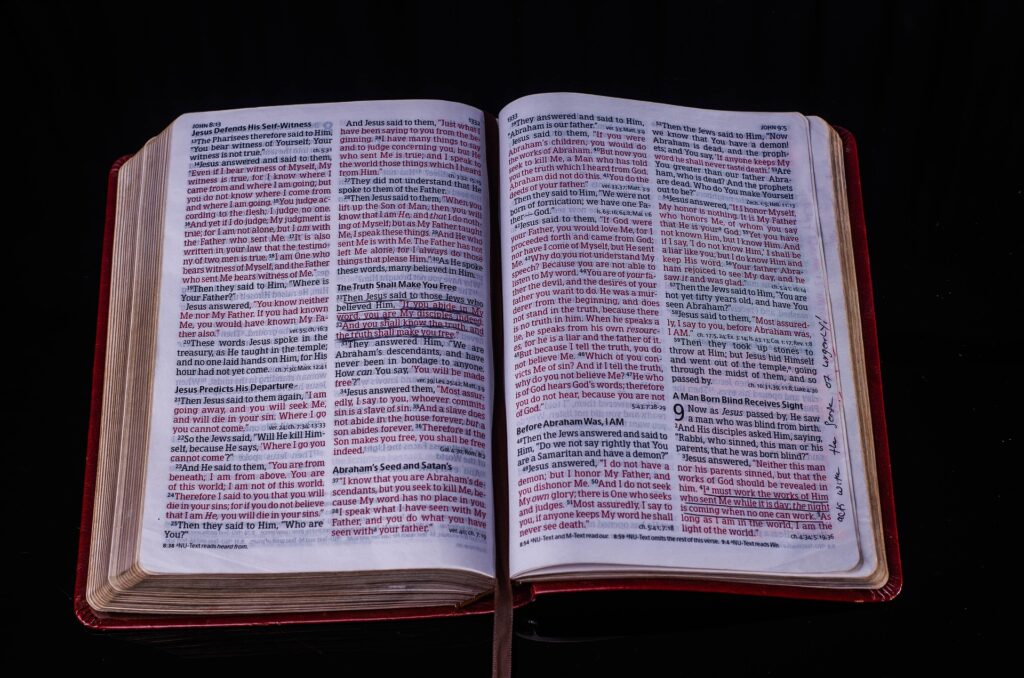
Preaching (2 Timothy 4:1-5)
When I was preaching at one congregation, a good friend of mine came to hold a gospel meeting. I was excited to hear my friend preach for the first time, but was I ever disappointed!
My friend, you see, got up and told a lot of stories about when he was young and stories about his kids, and he reminisced about his ministry. But he didn’t use Scripture. He gave good motivational speeches, but he would mention only one or two verses when he extended the invitation.
And people ate it up. The elders asked him to come back over and over for meetings, and he never preached a sermon.
Have you ever listened to a man preach who wouldn’t know the truth if it hit him upside the head? Have you ever heard a sermon based on Scripture and were convicted to your core? Some of you guys may have preached and you made sure your sermon was based on Scripture. Some of you—men and women—may have taught appropriate Bible classes and made doubly sure to base those classes on God’s truth.
Timothy had an obligation to proclaim the divine message. Paul told him: “Proper preaching proclaims the Word.”
Scripture (2 Timothy 4:1-5)
verse 1:
Paul charged Timothy “in the presence of God and of Christ Jesus.” A charge witnessed by a deity was considered unbreakable. The deity before whom Paul charged Timothy is the living God, the God whose Son will judge mankind, the God whose Son will return, and God whose Son reigns.
verse 2:
Paul charged Timothy to “preach the word.” Throughout the New Testament, “word” refers to the message about Jesus, i.e., the gospel.
Timothy was to be prepared to proclaim that message “in season and out of season.” The people of Paul’s day discussed when the right time was to have difficult conversations; Paul said the truth needed proclamation regardless of the time.
Timothy, using the word, was to reprove—prove where someone is wrong; rebuke—object to one’s moral failings; and exhort—encourage one to do right.
verses 3-4:
People would not always want healthy doctrine; instead, they would find teachers to suit themselves. They would leave the truth and believe in nothing but myths.
Application
“Proper preaching proclaims the Word.” Proper preaching does not involve opinions. Proper preaching does not involve politics. Proper preaching does not involve endless illustrations. Proper preaching holds forth the gospel so that someone can come to know God through Jesus Christ.
What do you need to understand about proper preaching?
One: The Profundity of Preaching
Preaching is serious business: “I charge you in the presence of God and of Christ Jesus, who is to judge the living and the dead, and by his appearing and his kingdom” (2 Tim 4:1). The charge for preaching comes from the throne of Almighty God.
Preaching has Profundity, for God instituted preaching: “It pleased God through the folly of what we preach to save those who believe” (1 Cor 1:21). Preaching is not man’s invention, rather God was pleased to save mankind through preaching.
Two: The Premise of Preaching
Preaching has only one Premise: “Preach the word” (2 Tim 4:2).
The word must be preached, for the word saves: “You have been born again, not of perishable seed but of imperishable, through the living and abiding word of God” (1 Pet 1:23). Any preacher who proclaims anything other than word of God needs to sit down and shut up! You know why? His ideas will not save you. His oratory will not save you. His psychology will not save you. His stories will not save you. The word of God will save you.
The preacher follows Micaiah’s example and declares: “As the LORD lives, what the LORD says to me, that I will speak” (1 Ki 22:14).
Three: The Period of Preaching
Preaching is to be done regardless of the Period: “Be ready in season and out of season” (2 Tim 4:2).
Micaiah preached in a difficult period; the messenger who summoned him before Ahab told him to preach smooth words to the king, but the prophet refused (1 Ki 22:13-28). Jeremiah was beaten and imprisoned, but he continued to speak the word of the Lord (Jer 37:11-21). When the apostles were warned not to continue preaching in Jesus’s name, they “continued to speak the word of God with boldness” (Acts 4:31).
Four: The Provocation of Preaching
Preaching requires boldness, for there is Provocation in preaching: “Reprove, rebuke, and exhort, with complete patience and teaching” (2 Tim 4:2).
Preaching confronts those living in sin. Concerning elders, Paul told Timothy, “As for those who persist in sin, rebuke them in the presence of all, so that the rest may stand in fear” (1 Tim 5:20). The Provocation of preaching isn’t so the preacher feels better about himself; he is to provoke that souls may be saved: “Rebuke them sharply, that they may be sound in faith” (Tit 1:13).
Five: The Passions of Preaching
Paul warned Timothy that folks would choose preaching to suit their own Passions: “The time is coming when people will not endure sound teaching, but having itching ears they will accumulate for themselves teachers to suit their own passions” (2 Tim 4:3).
Jude wrote about false teachers, and he reminded his readers that the apostles said, “In the last time there will be scoffers, following their own ungodly passions” (Jude 18). We’re certainly living in such a time. People choose how they want to worship. They choose their own church. They choose their own way to heaven. They choose their own morality. The prevailing passion of our day is not: “What does the Bible say?” but “What do I say?”
Conclusion
What if the world understood “Proper preaching proclaims the Word?” People would spend time seeking what God says rather than what the pastor says. People would understand a biblical rebuke is an act of love. People would desire the “pure milk of the word,” no matter how they felt. People would hold the preacher’s feet to the fire to make sure he was preaching truth.
The question you need to answer this morning is simple: “Are you living truth?”
This sermon was originally preached by Dr. Justin Imel, Sr., at Church of Christ Deer Park in Deer Park, Texas.